
June 18, 2026
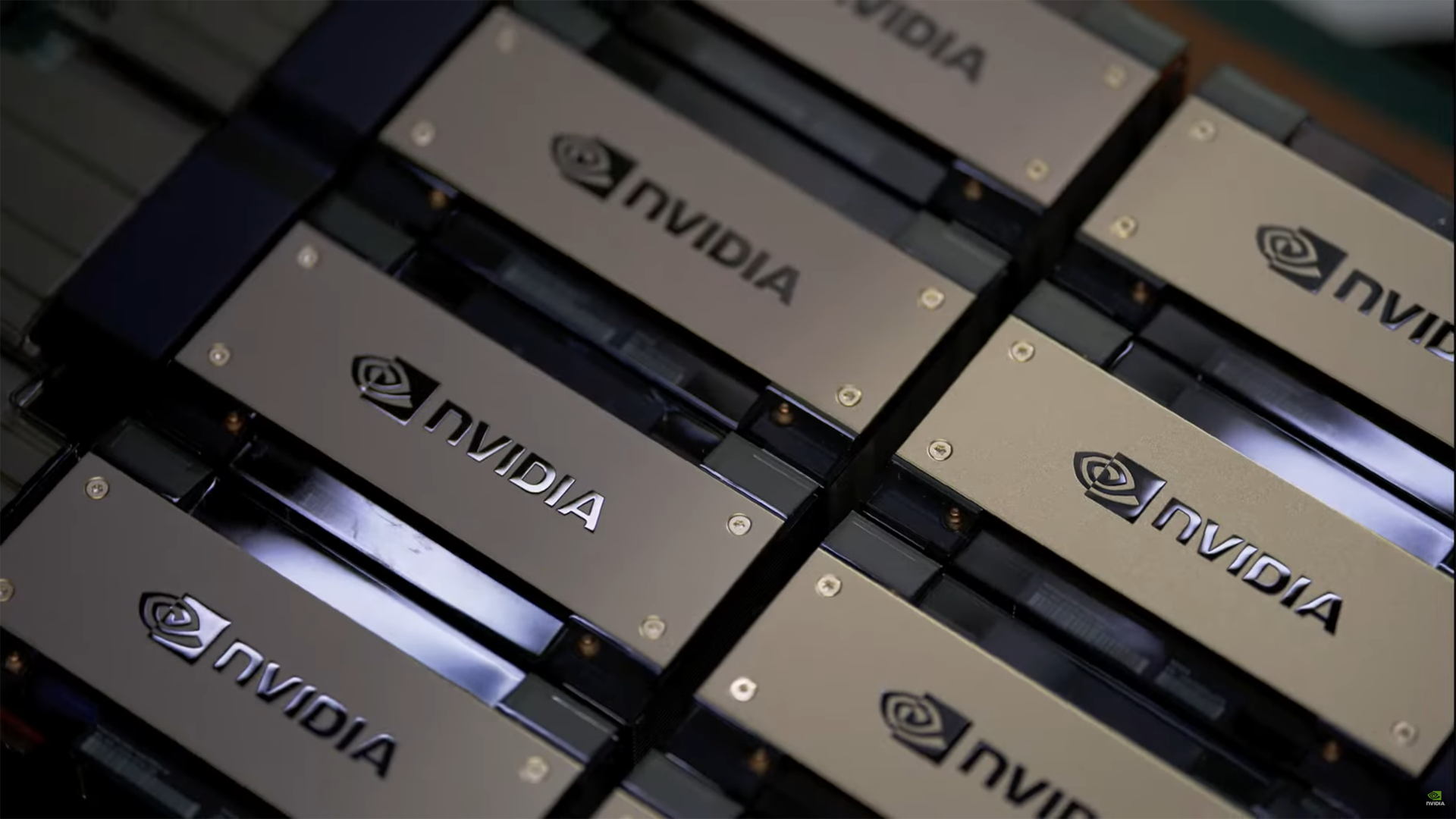
Most teams running H100 clusters in 2026 are not looking for permission to upgrade. They are looking for a clear answer to a specific question: at what point does the B300 change the economics or the operational limits of what they are running today. The answer depends on the workload. And for a significant share of production AI infrastructure, the H100 is still the right answer, not by default, but on the merits.
Fine-tuning at the 7B-34B range, FP16 training runs, inference serving for models that fit in 80 GB, none of these are bottlenecked by the H100's architecture. The toolchain is mature, the drivers are stable, and the operational knowledge your team has built around it has real value.
The economic case is also harder to dismiss than people often acknowledge. H100 infrastructure is priced in a market where Blackwell supply is still constrained. If your cost-per-token is acceptable and your utilization is high, migrating to B300 means revalidating your inference configuration, absorbing the operational disruption of a hardware transition, and taking on a higher node cost, before any performance benefit shows up in your workload. That is a real cost, even when the spec sheet comparison looks one-sided.
The H100 keeps making sense until your workloads hit the ceilings it actually has. Two of those are getting difficult to work around.
The first is memory. Eighty gigabytes was sufficient when the H100 launched. It is now the binding constraint for teams serving 70B+ parameter models, running reasoning architectures at long context windows, or trying to maintain KV caches without eviction strategies that degrade output quality. When a model requires two GPUs just to fit, you pay the communication overhead of tensor parallelism on every forward pass. That overhead does not shrink as traffic grows.
The second is inference throughput at scale. For high-traffic APIs where cost-per-token determines fleet size, the H100's FP8 compute becomes the constraint. Verified benchmarks put B300 LLM throughput at 11 to 15 times that of Hopper-generation hardware per GPU. A deployment that requires ten H100s today may require two or three B300s for equivalent throughput. With sufficient traffic, that changes the infrastructure economics in a way that is difficult to ignore.
The B300 ships with 288 GB of HBM3e per GPU: 3.6 times the H100's capacity. A 70B parameter model in FP16 fits on a single B300 with roughly 150 GB remaining for KV cache and batch headroom. Teams splitting that workload across two H100s today can consolidate, eliminate inter-GPU communication overhead, and simplify the deployment configuration. For models in the 200B+ range, the same logic applies at the node level.
On compute, the B300 delivers 15 petaFLOPS dense FP4 per GPU, roughly 18 times the H100's FP8 throughput. For serving reasoning models that generate long chain-of-thought sequences, the combination of memory and compute per GPU changes what is operationally viable: full context windows without cache eviction, larger batches without fragmentation, on fewer cards than your current H100 configuration requires.
The migration path is also cleaner than prior generation transitions. The B300 runs on the same CUDA toolchain. Workloads that run on H100 run on B300 without code changes. FP4 support requires TensorRT-LLM 0.15 or higher, or vLLM with FP4 quantization enabled, an inference stack update, not a pipeline rewrite.
The gap between hardware capability and actual workload performance is determined by the infrastructure layer. On a shared cloud, that gap is structural: NVLink bandwidth is contested when neighboring tenants are active, storage I/O is inconsistent during checkpoint writes, and egress fees accumulate on every artifact that leaves the node. None of this appears in a benchmark, it appears in your actual utilization numbers and your monthly bill.
On dedicated bare metal, none of those variables apply. The GPU's full resource profile belongs to your workload. No shared tenancy. No egress fees. No noisy neighbors on the interconnect.
For H100 clusters, that means the utilization you plan for is the utilization you get. For B300, the stakes are higher, the greater the peak capability of the hardware, the more costly any contention becomes. A workload running at 70% GPU utilization on shared infrastructure frequently reaches 90% or above on dedicated nodes. Across a long training run or a sustained inference deployment, that difference is real compute budget.
1Legion operates dedicated bare metal infrastructure on both H100 and B300, no shared tenancy, no egress fees, no hyperscaler overhead. If you are evaluating a migration or planning a new deployment on Blackwell Ultra, talk to an engineer today here.